
This comprehensive 12-week plan utilizes dumbbells for versatile training‚ accessible at home or the gym‚ focusing on strength‚ endurance‚ and definition.
Download the PDF guide for a structured approach‚ building from foundational strength to maximizing results‚ suitable for various fitness levels.
Effective for muscle sculpting‚ this plan offers a science-backed method to strengthen arms and improve overall physique‚ requiring only dumbbells.
Begin your transformation today with a detailed schedule‚ progressive overload techniques‚ and expert guidance for optimal gains.
Benefits of Dumbbell Training
Dumbbells offer unparalleled versatility‚ making them ideal for a comprehensive 12-week workout plan. Unlike machines isolating muscles‚ dumbbells engage multiple muscle groups simultaneously‚ enhancing functional strength and improving overall coordination. This holistic approach boosts calorie expenditure and contributes to a more toned physique.
Accessibility is a key benefit; dumbbells are affordable and space-efficient‚ perfect for home workouts. The downloadable PDF guide provides structured routines‚ eliminating guesswork and maximizing results. Dumbbell training promotes muscle hypertrophy and endurance‚ leading to increased strength and definition.
Furthermore‚ dumbbells correct muscle imbalances‚ as each side works independently‚ forcing stabilizing muscles to engage. This reduces injury risk and improves posture. The plan’s progressive overload ensures continuous challenge‚ driving consistent progress towards your fitness goals.
Who is This Plan For?
This 12-week dumbbell workout plan is designed for individuals with some fitness experience‚ though modifications can accommodate beginners. It’s perfect for those seeking a convenient and effective strength training program utilizing only dumbbells‚ as detailed in the downloadable PDF guide.
Ideal candidates have access to adjustable dumbbells or a range of weights to facilitate progressive overload. The plan suits individuals aiming to build muscle‚ increase endurance‚ or improve overall fitness levels at home or in a limited gym setting.
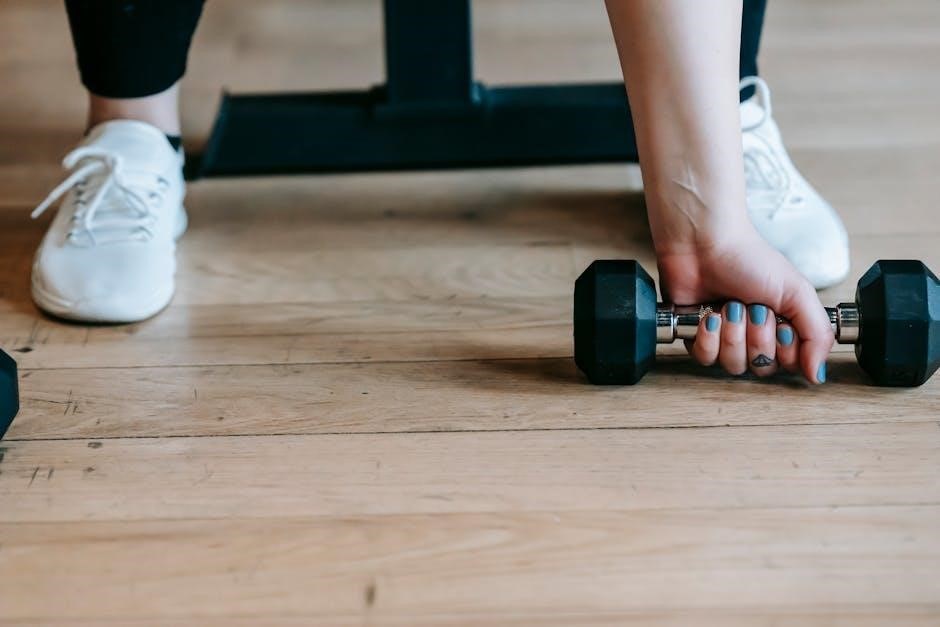
If you’re motivated and consistent‚ this plan will deliver results. It’s also beneficial for those recovering from injury (with physician approval) seeking a controlled and adaptable strength-building routine.
Phase 1: Building a Foundation (Weeks 1-4)
Focus on mastering proper form and establishing a solid strength base with full-body workouts‚ preparing you for the challenges ahead‚ as outlined in the PDF.
Workout Frequency & Structure
During Phase 1 (Weeks 1-4)‚ aim for three workouts per week‚ allowing for adequate recovery between sessions. This foundational phase prioritizes building a base level of strength and endurance.
Each workout should be a full-body routine‚ incorporating exercises that target all major muscle groups. Structure each session with a warm-up‚ followed by 6-8 exercises‚ and conclude with a cool-down.
The PDF guide provides a detailed schedule outlining specific workout days and rest days. Listen to your body and adjust the frequency if needed. Consistency is key during this initial phase‚ establishing a sustainable workout habit.
Focus on controlled movements and proper form over lifting heavy weights. This will help prevent injuries and maximize the effectiveness of each exercise.
Focus: Full Body Strength
Phase 1 prioritizes establishing a solid foundation of full-body strength. Dumbbells are ideal‚ requiring multiple muscle groups to stabilize and work together during each exercise. This contrasts with machines that isolate muscles.
The PDF guide details exercises like dumbbell squats‚ lunges‚ chest presses‚ rows‚ and overhead presses. These movements target legs‚ core‚ back‚ chest‚ and shoulders simultaneously.
Focus on compound exercises – those that work multiple muscle groups at once – to maximize efficiency and calorie burn. Proper form is crucial; prioritize technique over weight.
Aim for 8-12 repetitions for each exercise‚ completing 3 sets per workout. This rep range promotes both strength and muscular endurance. Remember‚ consistency and controlled movements are paramount for building a strong base.
Workout A: Upper Body
Workout A‚ detailed in the PDF guide‚ concentrates on strengthening the chest‚ back‚ shoulders‚ biceps‚ and triceps. Begin with dumbbell chest presses – flat‚ incline‚ or decline – for comprehensive chest development.
Follow with dumbbell rows‚ targeting the back muscles for improved posture and strength. Incorporate shoulder presses and lateral raises to sculpt well-rounded shoulders.
Finish with bicep curls and triceps extensions‚ isolating the arm muscles for increased definition. Aim for 3 sets of 8-12 repetitions for each exercise‚ focusing on controlled movements.
Remember to warm up with dynamic stretches and cool down with static stretches. Proper form is essential to prevent injuries and maximize results. Adjust dumbbell weight as needed to maintain good technique.
Workout B: Lower Body & Core
As outlined in the PDF guide‚ Workout B focuses on building strength and stability in the legs and core. Begin with dumbbell squats‚ a foundational exercise for overall lower body development.
Follow with dumbbell lunges – forward‚ reverse‚ or walking – to target individual leg muscles and improve balance. Incorporate Romanian deadlifts to strengthen the hamstrings and glutes.
For core work‚ include dumbbell Russian twists‚ wood chops‚ and plank variations. Aim for 3 sets of 12-15 repetitions for each exercise‚ maintaining proper form throughout.
Prioritize controlled movements and engage your core throughout each exercise. Adjust dumbbell weight to challenge yourself while preserving good technique. Remember to warm up and cool down appropriately.
Recommended Dumbbell Weight
The PDF guide emphasizes selecting a dumbbell weight that challenges you while maintaining proper form. Beginners should start with lighter weights – 5-10 lbs for women and 10-15 lbs for men – focusing on mastering technique.

As strength increases‚ progressively increase the weight in 2.5-5 lb increments. The goal is to choose a weight where the last 2-3 repetitions of each set are challenging but achievable.
Consider having a range of dumbbell weights available to accommodate different exercises and phases of the plan. Heavier dumbbells (15-25+ lbs) are beneficial for compound movements like squats and deadlifts.
Listen to your body and don’t hesitate to reduce the weight if you experience pain or struggle to maintain form. Prioritize quality over quantity for optimal results and injury prevention.
Phase 2: Increasing Strength & Endurance (Weeks 5-8)
This phase‚ detailed in the PDF‚ shifts focus to muscle hypertrophy with increased volume and intensity‚ utilizing three distinct workout days for optimal gains.
The 12-week dumbbell plan‚ outlined in the downloadable PDF guide‚ strategically structures workouts to maximize results. Weeks 1-4 establish a foundation with full-body sessions three times weekly‚ allowing for adequate recovery.
Phase 2 (Weeks 5-8) increases frequency to four workouts per week‚ splitting routines into Push‚ Pull‚ and Legs/Core days to target specific muscle groups.
Finally‚ Phase 3 (Weeks 9-12) maintains the four-day split‚ incorporating compound movement focus and isolation work for enhanced strength and definition.
Rest days are crucial; prioritize at least one full rest day per week‚ and listen to your body‚ adjusting as needed. This structured approach‚ detailed in the PDF‚ ensures progressive overload and minimizes the risk of injury.
Focus: Muscle Hypertrophy
During Phase 2 (Weeks 5-8) of the 12-week dumbbell plan‚ the primary focus shifts to muscle hypertrophy – increasing muscle size. This is achieved through a higher volume of training and strategic exercise selection‚ detailed within the downloadable PDF guide.
Workouts are designed to create metabolic stress and muscle damage‚ key drivers of hypertrophy. Rep ranges typically fall between 8-12‚ utilizing a weight that challenges you within that range.
The Push/Pull/Legs split allows for targeted muscle group stimulation‚ maximizing growth potential. Proper form and controlled movements are paramount to ensure effective muscle fiber recruitment and minimize injury risk.
Progressive overload‚ consistently increasing weight or reps‚ is essential for continued hypertrophy throughout this phase‚ as outlined in the PDF.
Workout A: Push Day (Chest‚ Shoulders‚ Triceps)
Workout A‚ detailed in the 12-week dumbbell plan PDF‚ concentrates on pushing movements‚ targeting the chest‚ shoulders‚ and triceps. This session builds upper body strength and contributes to overall muscle hypertrophy.
Expect exercises like dumbbell bench press‚ incline dumbbell press‚ and dumbbell flyes for chest development. Shoulder work includes dumbbell shoulder press‚ lateral raises‚ and front raises.
Triceps are hit with dumbbell skullcrushers‚ overhead extensions‚ and close-grip dumbbell presses. Perform 3-4 sets of 8-12 repetitions for each exercise‚ focusing on controlled movements.
Prioritize proper form to maximize muscle activation and prevent injury. Adjust dumbbell weight to maintain challenge within the target rep range‚ as guided in the PDF.
Workout B: Pull Day (Back‚ Biceps)
Workout B‚ outlined in the 12-week dumbbell plan PDF‚ focuses on pulling movements‚ effectively targeting the back and biceps muscles for balanced upper body development. This session enhances posture and builds pulling strength.
Back exercises include dumbbell rows‚ single-arm rows‚ and dumbbell pullovers. These movements build thickness and width in the back. Bicep work features dumbbell curls‚ hammer curls‚ and concentration curls.
Aim for 3-4 sets of 8-12 repetitions for each exercise‚ maintaining controlled form throughout. Focus on squeezing the target muscles during each repetition to maximize muscle fiber recruitment;
The PDF provides guidance on selecting appropriate dumbbell weights to challenge your muscles while preserving proper technique. Progressive overload is key for continued gains.

Workout C: Legs & Core
Workout C‚ detailed within the 12-week dumbbell workout plan PDF‚ concentrates on lower body strength and core stability – essential for overall fitness and functional movement. This session builds powerful legs and a resilient core.
Leg exercises include dumbbell squats‚ lunges (forward‚ reverse‚ and walking)‚ and Romanian deadlifts. These movements target quads‚ hamstrings‚ and glutes. Core work features Russian twists with a dumbbell‚ and plank variations.
Perform 3-4 sets of 10-15 repetitions for leg exercises and 3 sets of 15-20 repetitions for core exercises‚ prioritizing controlled movements and proper form.
The PDF guide offers modifications for varying fitness levels and emphasizes the importance of engaging the core throughout each exercise. Progressive overload is crucial for continued progress.
Progressive Overload Techniques
The 12-week dumbbell workout plan PDF emphasizes progressive overload – the key to continuous muscle growth and strength gains. This involves gradually increasing the demands placed on your muscles over time.
Techniques include increasing dumbbell weight when you can comfortably complete all sets and reps with good form. Another method is to increase the number of repetitions per set‚ or add an additional set to your workout.
Decreasing rest time between sets also increases intensity. Variations like tempo training (slowing down the eccentric phase) and incorporating supersets are detailed in the PDF.
Consistent tracking of your workouts is vital to monitor progress and ensure you’re continually challenging yourself. The PDF provides a workout log template for easy tracking.

Phase 3: Maximizing Results (Weeks 9-12)
This final phase focuses on strength and definition‚ utilizing compound and isolation exercises detailed in the 12-week dumbbell workout plan PDF.
Consider a deload week to optimize recovery and prevent plateaus‚ ensuring continued progress towards your fitness goals.
The 12-week dumbbell workout plan PDF structures training progressively‚ adapting to your evolving strength and endurance. Initially‚ expect three workouts per week‚ allowing ample recovery between sessions. As you advance‚ frequency increases to four or five workouts‚ demanding greater commitment.
Phase 1 (Weeks 1-4) emphasizes full-body routines‚ performed three times weekly. Phase 2 (Weeks 5-8) introduces a split routine – Push‚ Pull‚ and Legs – completed over three to four days. Phase 3 (Weeks 9-12) refines this split‚ potentially adding accessory work for targeted muscle development‚ performed four to five times weekly.
Each workout should include a warm-up‚ strength training exercises‚ and a cool-down. Rest periods between sets are crucial for recovery and performance‚ typically ranging from 60-90 seconds. Consistency and adherence to the schedule‚ as outlined in the PDF‚ are key to achieving optimal results.
Focus: Strength & Definition
Phase 3 (Weeks 9-12) of the 12-week dumbbell workout plan PDF prioritizes maximizing both strength gains and muscular definition. This phase shifts towards heavier weights and more challenging exercise variations‚ pushing your limits.
Workout A centers on compound movements – exercises engaging multiple muscle groups simultaneously – like dumbbell squats‚ lunges‚ and rows. Workout B incorporates isolation exercises‚ targeting specific muscles for refined shaping and detail‚ alongside accessory work to address weaknesses.
The PDF guide details specific rep ranges and set structures designed to stimulate hypertrophy (muscle growth) and enhance definition. Proper form remains paramount to prevent injury and ensure effective muscle activation. This phase demands dedication and a focus on controlled movements.
Workout A: Compound Movements Focus
Workout A‚ detailed in the 12-week dumbbell workout plan PDF‚ emphasizes compound exercises for maximum efficiency and strength development. This session targets multiple muscle groups simultaneously‚ boosting calorie burn and hormonal response.
Expect exercises like dumbbell squats‚ lunges‚ Romanian deadlifts‚ and overhead presses. These movements build a strong foundation and improve functional strength. The PDF provides specific weight recommendations based on your progress.
Focus on maintaining proper form throughout each exercise to prevent injury and maximize muscle activation. Controlled movements are key. This workout is designed to challenge your entire body‚ promoting overall strength and power.
Rest periods are strategically incorporated to allow for adequate recovery between sets.
Workout B: Isolation & Accessory Work
Workout B‚ outlined in the 12-week dumbbell workout plan PDF‚ concentrates on isolating specific muscle groups and incorporating accessory exercises for balanced development. This session complements Workout A by refining muscle definition and addressing any weaknesses.
Expect targeted exercises like bicep curls‚ triceps extensions‚ lateral raises‚ and calf raises. These movements enhance muscle shape and improve overall aesthetics. The PDF details proper form and rep ranges for each exercise.
Accessory work includes exercises that support primary movements‚ such as forearm curls and grip strengthening exercises. These enhance stability and prevent imbalances. Prioritize controlled movements and focus on the muscle contraction.
Proper form is crucial to avoid injury and maximize results.
Deload Week Considerations
The 12-week dumbbell workout plan PDF incorporates a crucial deload week‚ typically around week 12‚ to prevent overtraining and optimize recovery. This isn’t a week off; it’s a strategic reduction in training volume and intensity.

Reduce weight by 40-50% and decrease sets and reps. Focus on maintaining perfect form and reconnecting with the movement patterns. This allows your muscles and nervous system to recover fully.
Deloading prevents plateaus and reduces the risk of injury. It’s a proactive step towards long-term progress. The PDF provides specific guidelines for adjusting your workouts during this week.
Prioritize sleep and nutrition during the deload week to maximize recovery benefits. Listen to your body and adjust as needed.

Nutrition & Recovery
Optimal results with this 12-week dumbbell plan require prioritizing protein intake‚ hydration‚ and sufficient rest for muscle repair and growth.
The PDF guide details specific recommendations to fuel your workouts and enhance recovery.
Importance of Protein Intake
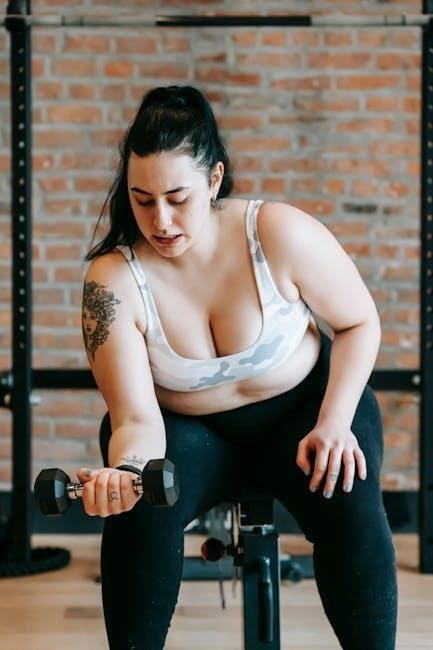
Protein is fundamental for muscle repair and growth‚ especially crucial during this 12-week dumbbell workout plan. Adequate protein intake ensures your body can effectively rebuild muscle tissue damaged during training sessions.
The downloadable PDF guide provides tailored protein recommendations based on your weight and activity level‚ aiming for approximately 0.8-1 gram of protein per pound of body weight daily.
Prioritize lean protein sources like chicken‚ fish‚ turkey‚ eggs‚ and plant-based options such as lentils and beans.
Strategic protein timing – consuming protein before and after workouts – maximizes muscle protein synthesis.
Consistent protein consumption throughout the day supports sustained muscle recovery and adaptation‚ leading to optimal results from your dumbbell training.
Hydration Strategies
Maintaining optimal hydration is paramount throughout this 12-week dumbbell workout plan‚ directly impacting performance and recovery. Dehydration can significantly hinder strength gains and increase the risk of muscle cramps.
The accompanying PDF guide emphasizes drinking water consistently throughout the day‚ not just during workouts. Aim for at least half your body weight in ounces of water daily.
Electrolyte balance is also crucial‚ especially with increased sweating. Consider electrolyte-rich beverages or foods to replenish lost minerals.
Monitor urine color – pale yellow indicates adequate hydration‚ while dark yellow suggests you need to drink more fluids.
Prioritize hydration before‚ during‚ and after each dumbbell session to support muscle function and overall well-being.
Rest and Sleep Recommendations
Adequate rest and sleep are non-negotiable components of this 12-week dumbbell workout plan‚ crucial for muscle recovery and growth. Overtraining can lead to plateaus and injuries‚ hindering your progress.
The downloadable PDF guide recommends aiming for 7-9 hours of quality sleep each night. Prioritize a consistent sleep schedule to regulate your body’s natural rhythms.
Incorporate rest days into your weekly routine‚ allowing your muscles time to repair and rebuild. Active recovery‚ like light walking‚ can also be beneficial.
Listen to your body and don’t hesitate to take an extra rest day when needed. Ignoring fatigue can compromise your results and well-being.
Prioritize sleep as a key element alongside your dumbbell workouts and nutrition for optimal gains.
Downloadable PDF Guide
Unlock the full potential of this 12-week dumbbell workout plan with our comprehensive downloadable PDF guide! It contains a detailed‚ day-by-day schedule‚ ensuring you stay on track towards your fitness goals.
The guide includes printable workout logs to monitor your progress‚ track your weights‚ and visualize your improvements over the 12 weeks. It’s designed for easy access and convenience.
Benefit from expert tips on proper form‚ progressive overload techniques‚ and nutritional guidance to maximize your results. It’s a complete resource for success.
Download now and receive a 4-week science-backed arm workout plan as a bonus‚ further enhancing your strength and definition;
Start your transformation today with this invaluable tool!