
Neuromuscular re-education is a physiotherapy practice focusing on restoring proper function, improving motor control, coordination, and proprioception through targeted exercises.
This approach addresses movement impairments stemming from disrupted communication between the nervous and muscular systems, ultimately enhancing physical well-being.
Understanding this process is crucial, and resources like neuromuscular re-education exercises PDFs can provide valuable guidance for both therapists and patients.
Defining Neuromuscular Re-education
Neuromuscular re-education is a specialized therapeutic approach designed to restore optimal communication and control between the brain and muscles. It’s not simply about strengthening muscles; it’s about retraining the nervous system to activate those muscles correctly and efficiently.
This process addresses movement dysfunction arising from injuries, neurological conditions, or even ingrained, inefficient movement patterns. The goal is to “re-educate” the muscles, improving motor control, coordination, and proprioception – your body’s awareness of its position in space.
Resources like neuromuscular re-education exercises PDFs often detail specific techniques and protocols used by therapists. These PDFs can illustrate how isolated muscle contractions and movement pattern re-training are employed to rebuild proper neurological pathways, ultimately leading to improved function and reduced pain. They serve as valuable tools for understanding and implementing these techniques.
The Importance of Neuromuscular Control
Optimal neuromuscular control is fundamental to efficient, pain-free movement. It ensures muscles fire at the right time, with the appropriate force, and in a coordinated manner. When this control is compromised, it can lead to a cascade of problems, including altered movement patterns, increased risk of injury, and chronic pain.
Effective movement relies on a constant dialogue between the nervous system and muscles. Disruptions to this communication, whether due to injury or learned dysfunction, necessitate targeted intervention.
Neuromuscular re-education exercises, often detailed in readily available PDFs, aim to restore this vital connection. These resources showcase how specific exercises can enhance proprioception, improve coordination, and ultimately, regain control over movement, leading to improved physical function and overall well-being. Accessing these PDFs can empower both therapists and patients.

Conditions Benefiting from Neuromuscular Re-education
A wide range of conditions can benefit significantly from neuromuscular re-education. These include stroke recovery, where regaining motor control is paramount, and neurological conditions impacting movement, such as cerebral palsy or multiple sclerosis. Additionally, individuals recovering from orthopedic injuries – ligament tears, fractures, or joint replacements – often require re-education to restore proper movement patterns.
Chronic pain conditions, stemming from muscular imbalances or dysfunctional movement, also respond well to this approach. Even seemingly simple issues like poor posture or repetitive strain injuries can be addressed through targeted exercises.
Fortunately, numerous neuromuscular re-education exercises are compiled in accessible PDF guides, offering tailored programs for various conditions. These resources provide valuable insights and structured exercises to facilitate recovery and improve quality of life.

The Science Behind Neuromuscular Re-education
Neuromuscular re-education leverages the brain’s plasticity to relearn movement, addressing dysfunction through targeted exercises often detailed in helpful PDF resources.
The Neuromuscular System: A Brief Overview
The neuromuscular system is a complex network enabling movement, comprising the brain, spinal cord, nerves, and muscles. It functions through intricate communication, where the brain sends signals via nerves to muscles, initiating contraction and movement.
This system relies heavily on proprioception – the body’s awareness of its position in space. Disruptions to this communication, caused by injury or neurological conditions, lead to impaired motor control and pain.
Neuromuscular re-education aims to restore this vital dialogue, retraining the nervous system to effectively control muscles. Understanding this system is fundamental when utilizing resources like neuromuscular re-education exercises PDFs, which often detail exercises targeting specific components of this network.
These PDFs frequently illustrate how targeted movements can rebuild neural pathways and improve muscle function, ultimately enhancing overall physical performance and reducing discomfort.
How Dysfunction Impacts Movement
When the neuromuscular system experiences dysfunction, the precise communication between the brain and muscles is compromised, leading to altered movement patterns. Injuries, neurological conditions, or even habitual poor posture can disrupt these neural pathways.
This disruption manifests as weakness, incoordination, pain, and limited range of motion. The body may compensate, creating inefficient and potentially harmful movement strategies.
Neuromuscular re-education addresses these issues by retraining the nervous system. Resources like neuromuscular re-education exercises PDFs often provide targeted interventions to correct these dysfunctional patterns.
These PDFs detail exercises designed to restore proper muscle activation, improve proprioception, and ultimately, facilitate more efficient and pain-free movement. They emphasize rebuilding the connection, rather than simply strengthening muscles in isolation.
The Brain’s Role in Motor Learning and Re-learning
The brain is central to both acquiring new motor skills and re-learning those lost due to injury or dysfunction. Neuromuscular re-education leverages the brain’s neuroplasticity – its ability to reorganize itself by forming new neural connections throughout life.
Exercises aren’t simply about muscle strengthening; they’re about providing the brain with sensory feedback to refine motor programs. Repetition and focused attention are key to reinforcing these new pathways.
Neuromuscular re-education exercises, often detailed in readily available PDFs, are designed to challenge the brain and encourage adaptation;
These PDFs provide structured programs that progressively increase complexity, promoting optimal motor learning. The brain essentially “rewires” itself, restoring efficient and coordinated movement patterns, ultimately improving function and reducing pain.
Key Principles of Neuromuscular Re-education Exercises
Effective exercises prioritize proprioception, motor control, and task-specific training, often outlined in neuromuscular re-education exercises PDFs for guided implementation.
Proprioception and its Enhancement
Proprioception, the body’s ability to sense its position and movement in space, is fundamental to effective neuromuscular re-education. Dysfunction often stems from impaired proprioceptive feedback, hindering coordinated movement. Enhancing this sense is a core principle, frequently detailed within neuromuscular re-education exercises PDFs.
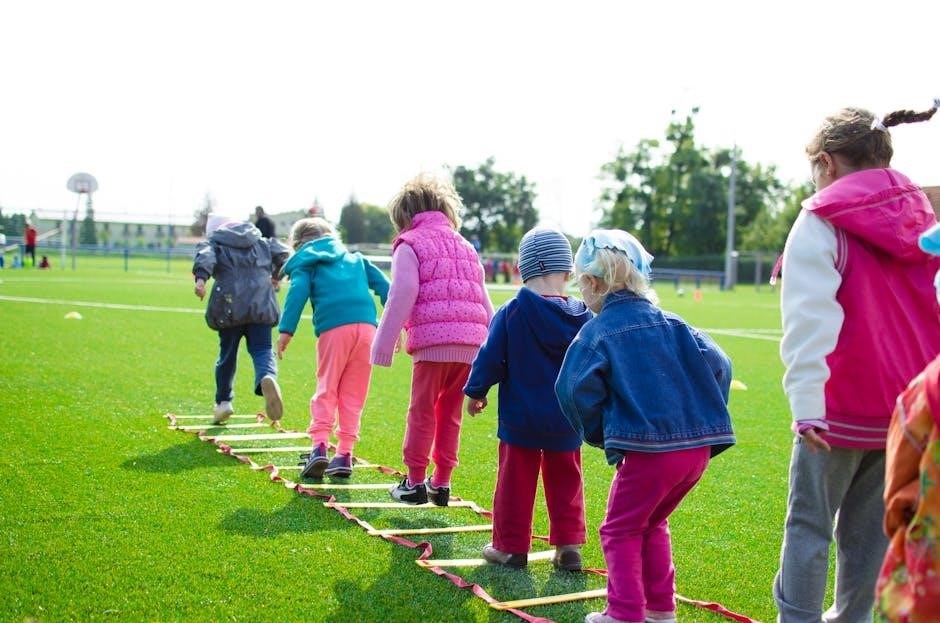
Exercises targeting proprioception often involve unstable surfaces – balance boards, foam pads – challenging the body to maintain control. Closed-chain exercises, where the limb is fixed, are also beneficial, forcing the neuromuscular system to work cohesively. These PDFs commonly illustrate progressions, starting with simple weight shifts and advancing to dynamic movements.
Visual feedback can initially aid awareness, but the goal is to develop intrinsic awareness. Perturbation training, involving unexpected disturbances, further refines proprioceptive responses. Regularly consulting neuromuscular re-education exercises PDFs ensures proper technique and progression, maximizing benefits and minimizing risk.
Motor Control and Coordination Improvement
Neuromuscular re-education prioritizes regaining efficient motor control – the ability to execute movements smoothly and accurately. Often, dysfunction arises from altered muscle activation patterns or impaired intermuscular coordination. Neuromuscular re-education exercises PDFs frequently outline strategies to address these deficits.
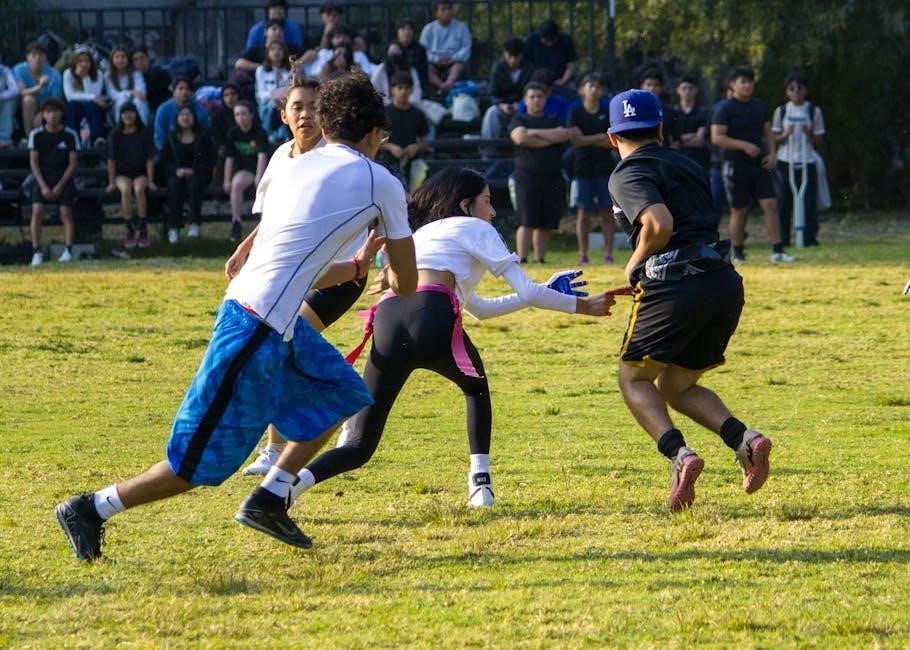
Exercises begin with isolating muscle contractions, focusing on proper activation and sequencing. Progressing to multi-joint movements, these PDFs demonstrate how to break down complex tasks into smaller, manageable components. Emphasis is placed on conscious control, gradually transitioning to automaticity through repetition.
Coordination drills, like reaching tasks or rhythmic movements, challenge the nervous system to synchronize muscle activity. Visual cues and external feedback can initially assist, but the aim is to develop intrinsic motor control. Utilizing detailed neuromuscular re-education exercises PDFs ensures a structured and progressive approach to rehabilitation.
Task-Specific Training
Neuromuscular re-education excels through task-specific training, meaning exercises directly mimic real-life activities. Unlike generalized exercises, this approach focuses on retraining movements essential for a patient’s specific goals – walking, reaching, or returning to sport. Many neuromuscular re-education exercises PDFs highlight this principle.
These PDFs often present progressions, starting with simplified versions of the task and gradually increasing complexity. For example, a patient recovering from a stroke might begin with assisted reaching and progress to functional tasks like retrieving objects. The focus remains on replicating the demands of the desired activity.
This method leverages neuroplasticity, the brain’s ability to reorganize itself by forming new neural connections. By repeatedly practicing task-relevant movements, the nervous system relearns efficient and coordinated patterns. Comprehensive neuromuscular re-education exercises PDFs provide detailed protocols for implementing task-specific training effectively.

Common Neuromuscular Re-education Exercises
Neuromuscular re-education utilizes isolated contractions, movement pattern retraining, and balance exercises, often detailed in neuromuscular re-education exercises PDFs.
These exercises restore muscle control and coordination, improving function and reducing pain through targeted, progressive rehabilitation protocols.
Isolated Muscle Contractions
Isolated muscle contractions form a foundational element of neuromuscular re-education, focusing on activating specific muscles without compensatory movements. These exercises, frequently illustrated in neuromuscular re-education exercises PDFs, aim to re-establish the neural pathways responsible for individual muscle control.
Techniques include isometric exercises – holding a contraction without joint movement – and gentle, controlled concentric and eccentric contractions. For example, quadriceps sets or gluteal squeezes are common starting points. The goal isn’t strength initially, but rather conscious muscle engagement.
PDF guides often provide detailed progressions, starting with minimal resistance and gradually increasing the challenge as the patient demonstrates improved control. Biofeedback may be incorporated to provide real-time feedback on muscle activity, enhancing awareness and promoting accurate activation. These exercises are crucial for rebuilding the fundamental building blocks of movement.
Movement Pattern Re-training
Movement pattern re-training builds upon isolated muscle work, focusing on coordinating multiple muscles to perform functional movements. Neuromuscular re-education exercises PDFs frequently showcase progressions from simple to complex patterns, like sit-to-stand or reaching tasks.
This involves breaking down movements into smaller components, cueing proper form, and providing external support as needed. The emphasis is on retraining the nervous system to execute movements efficiently and with correct sequencing. Visual aids and verbal cues, often detailed in PDF resources, are vital.
Exercises might initially be performed in a controlled environment, gradually progressing to more dynamic and unpredictable situations. Mirror therapy and video analysis can provide valuable feedback. The ultimate aim is to restore natural, fluid movement patterns, improving functional abilities and reducing compensatory strategies.
Balance and Stability Exercises

Balance and stability exercises are a cornerstone of neuromuscular re-education, crucial for regaining control and preventing falls. Neuromuscular re-education exercises PDFs often include a range of activities, starting with static balance challenges – holding a position with a reduced base of support.
Progressions involve dynamic movements, like weight shifting, tandem stance, and walking with perturbations. These exercises challenge the body’s ability to react and maintain equilibrium. Utilizing unstable surfaces, such as foam pads or wobble boards, further enhances proprioceptive input.
PDF guides frequently detail specific protocols, including repetitions, sets, and progression criteria. Core strengthening exercises are often integrated, as a stable core is fundamental for balance. The goal is to improve reactive balance strategies and enhance postural control, leading to increased confidence and functional independence.
Accessing Neuromuscular Re-education Resources (PDFs)
Numerous neuromuscular re-education exercises PDFs are available online, offering valuable protocols and guidance for therapists and patients seeking to improve motor control.
Finding Reliable PDF Guides
Locating trustworthy PDF guides for neuromuscular re-education exercises requires careful consideration. Begin by searching reputable physiotherapy associations’ websites, as they often provide evidence-based resources for professionals and patients. University medical centers and research institutions are also excellent sources, frequently offering downloadable protocols and exercise programs.
Prioritize PDFs authored by qualified physical therapists or healthcare professionals. Look for credentials and affiliations listed on the document or the source website. Be cautious of guides lacking author information or originating from unverified sources. Cross-reference information with multiple sources to ensure accuracy and consistency.
Pay attention to the publication date; newer PDFs are more likely to reflect current best practices. Finally, consider whether the PDF is freely available or requires a subscription – while paid resources aren’t inherently better, they may indicate a higher level of quality control and professional oversight.
Evaluating the Quality of PDF Materials
Assessing the quality of neuromuscular re-education exercises PDFs is paramount for safe and effective implementation. Begin by scrutinizing the clarity of instructions; exercises should be described with precise cues and accompanied by illustrative images or videos. A good PDF will detail proper form, common errors, and modifications for varying ability levels.

Look for a rationale explaining the purpose of each exercise and how it addresses specific neuromuscular deficits. Evidence-based PDFs will cite relevant research or clinical guidelines supporting their recommendations. Beware of guides promoting unsubstantiated claims or lacking a scientific basis.
Consider the overall organization and presentation. A well-structured PDF will be logically organized, easy to navigate, and free of grammatical errors. Finally, assess whether the PDF aligns with your individual needs and goals, or the recommendations of your healthcare provider.
Utilizing PDFs for Home Exercise Programs
Neuromuscular re-education exercises PDFs can be invaluable tools for extending therapy beyond the clinic. However, successful implementation requires careful adherence to guidelines. Begin by thoroughly reviewing the PDF with your physical therapist to ensure exercises are appropriate for your condition and skill level.
Establish a consistent schedule and dedicate a quiet, distraction-free space for your home program. Prioritize proper form over repetitions; focus on quality movement patterns as described in the PDF. Don’t hesitate to modify exercises if needed, but consult your therapist first.
Track your progress and note any pain or discomfort. Regularly communicate with your therapist about your experience, allowing for adjustments to the program. Remember, PDFs are supplementary tools – they don’t replace personalized guidance.