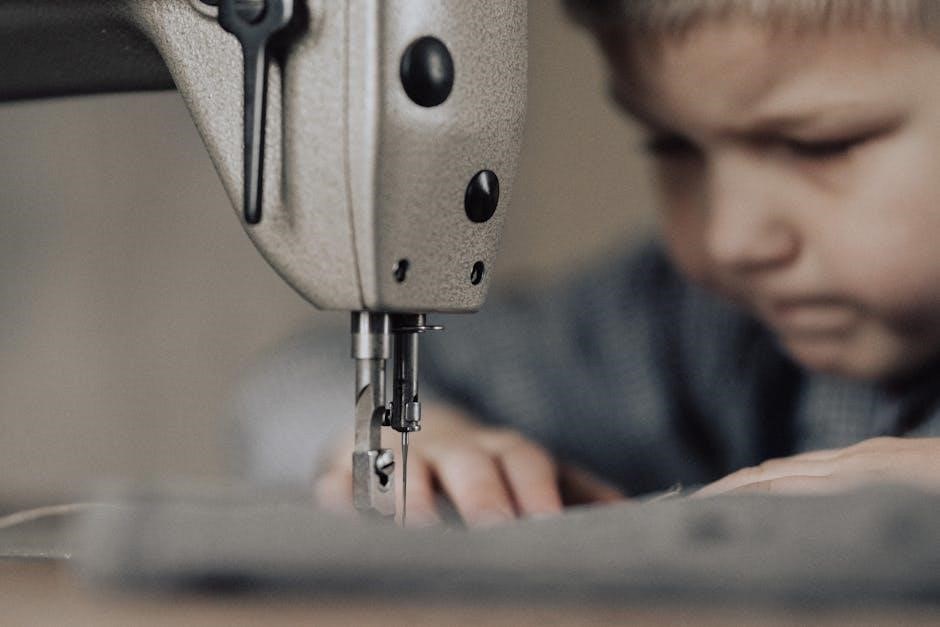
Kenmore’s 158 series sewing machines, like the 158.90 and 158.1980x, are popular models with readily available manuals for users seeking guidance and support.
These manuals, often found online, provide detailed instructions for operation, maintenance, and troubleshooting, ensuring a positive sewing experience.
Overview of the Kenmore 158 Series
The Kenmore 158 series represents a line of dependable sewing machines manufactured by Sears, known for their robust construction and user-friendly design. These machines, including models like the 158.90 and variations such as the 158.1980x, gained popularity for both basic and intermediate sewing tasks.
Numerous manuals are accessible online, detailing the features and operation of these machines. They cater to a wide range of sewing needs, from simple alterations to more complex projects. The availability of these resources contributes to the enduring appeal of the Kenmore 158 series among sewing enthusiasts and beginners alike, offering accessible support.
Why This Manual is Important
A Kenmore 158 sewing machine manual is crucial for maximizing the machine’s potential and ensuring its longevity. These manuals provide step-by-step instructions for threading, bobbin winding, stitch selection, and maintenance procedures, preventing damage and ensuring optimal performance.
Access to a manual empowers users to troubleshoot common issues independently, saving time and repair costs. Whether a digital download or a physical copy, the manual unlocks the full functionality of the machine, allowing both novice and experienced sewers to confidently tackle a variety of projects. It’s an invaluable resource!
Machine Features and Components
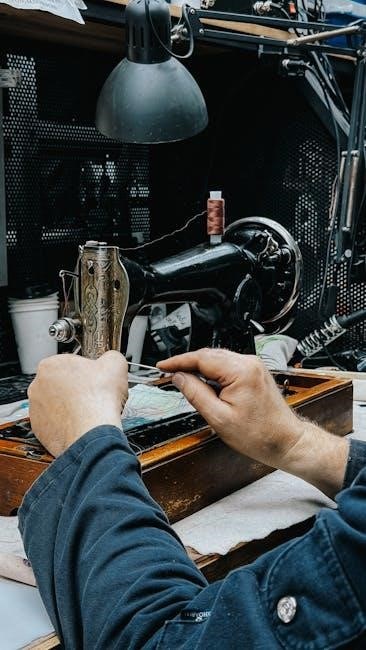
Kenmore 158 machines boast key parts like a bobbin winding system, stitch selection dial, and tension control, detailed within the comprehensive sewing machine manual.
Identifying Key Parts
The Kenmore 158 sewing machine manual meticulously details each component. Users will find illustrations and descriptions of the handwheel, presser foot, needle clamp, and feed dogs.
Crucially, the manual highlights the bobbin case and cover, essential for understanding the threading process. It also identifies the stitch length dial, stitch width dial, and reverse lever, allowing for precise stitch control.
Furthermore, the manual points out the power switch, foot controller, and tension dials, ensuring users can safely and effectively operate their machine. Proper identification of these parts is vital for maintenance and repair.
Bobbin Winding System
The Kenmore 158 manual provides a step-by-step guide to winding the bobbin. Initially, it instructs users to place the thread spool on the spool pin and guide the thread through the tension disc.
Next, the manual details how to thread the bobbin and engage the bobbin winding mechanism, typically by pushing the bobbin spindle to the right. It emphasizes the importance of consistent thread tension during winding.
Finally, the manual explains how to disengage the winding mechanism and remove the full bobbin. Correct bobbin winding is crucial for achieving even stitches and preventing machine malfunctions.
Thread Tension Control
The Kenmore 158 sewing machine manual highlights the importance of proper thread tension for optimal stitch quality. It explains that the tension dial controls the force applied to the upper thread.
Adjusting this dial impacts the balance between the upper and lower threads, influencing the appearance of the stitch on the fabric. The manual advises testing tension on a scrap fabric piece.
Too much tension can cause puckering, while too little results in loose stitches. Finding the correct setting ensures a balanced, professional-looking seam, crucial for various sewing projects.
Stitch Selection Dial
The Kenmore 158 sewing machine manual details the function of the stitch selection dial, a key component for versatility. This dial allows users to choose from a range of stitch patterns, catering to diverse sewing needs.
Options typically include straight stitch, zigzag stitch, and potentially decorative stitches, depending on the specific model. The manual provides clear diagrams illustrating each stitch pattern.
Proper selection is crucial for achieving the desired aesthetic and functionality in projects, from basic seams to intricate embellishments. Understanding the dial’s markings is essential for effective operation.
Setting Up Your Machine
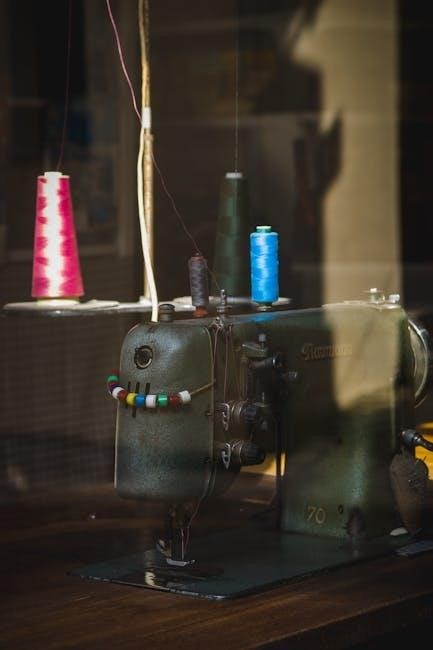
The Kenmore 158 manual guides users through initial setup, covering powering on, essential checks, and proper threading techniques for optimal performance.
Powering On and Initial Checks
Before beginning any sewing project with your Kenmore 158, consult the manual for specific power requirements and ensure the machine is correctly plugged into a grounded outlet.
Upon powering on, verify the power switch functions as expected and that the internal light illuminates, indicating proper electrical connection.
The manual emphasizes checking the handwheel’s free movement; it should rotate smoothly without resistance. Also, confirm the bobbin cover is securely in place and the presser foot is down before attempting to sew, as these are crucial safety and operational prerequisites.
Finally, a quick visual inspection for any loose parts or damage is recommended before each use.
Threading the Machine
The Kenmore 158 manual provides detailed diagrams illustrating the correct threading path, crucial for proper stitch formation. Begin by raising the presser foot and the needle to its highest position.
Follow the numbered guide, typically starting with the spool pin, then through the thread guides, tension discs, and finally, the needle clamp.
Ensure the thread is securely seated in each guide and tension component to prevent skipped stitches or uneven tension. The manual stresses the importance of threading with the presser foot up during initial threading.
Always refer to the specific diagram for your model variation, as slight differences may exist.
Winding and Inserting the Bobbin
The Kenmore 158 manual details a bobbin winding system, typically involving placing the spool on the pin and guiding the thread through tension discs before winding onto the bobbin.
Engage the bobbin winding mechanism, often by pushing the bobbin spindle to the right, and start the machine. Once full, the machine should automatically stop.
To insert the bobbin, open the bobbin case cover and place the bobbin in the designated compartment, ensuring the thread unwinds in the correct direction, as illustrated in the manual.
Draw up the bobbin thread through the tension spring before beginning to sew.
Basic Sewing Techniques
The Kenmore 158 manual guides users through fundamental techniques like straight and zigzag stitching, offering stitch length and width adjustments for varied projects.
Straight Stitching
Mastering the straight stitch is foundational for any sewing project, and the Kenmore 158 manual provides clear instructions. Begin by selecting the straight stitch option on the stitch selection dial.
Ensure the fabric is positioned correctly under the presser foot, aligning the desired seam allowance with the guide markings on the needle plate.
Gently depress the foot pedal to initiate sewing, maintaining a consistent speed for a uniform stitch. The manual emphasizes the importance of guiding the fabric, not pulling it, to prevent distortion.
Practice on scrap fabric to achieve consistent stitch length and straight lines before tackling your final project. Adjust stitch length as needed for different fabric weights and applications.
Zigzag Stitching
The Kenmore 158’s zigzag stitch offers versatility for various applications, from finishing raw edges to creating decorative designs. Select the zigzag stitch on the dial, and adjust the stitch width using the corresponding control.
Wider stitches are ideal for preventing fabric fraying, while narrower stitches are suitable for reinforcing seams. The manual details how to adjust stitch length in conjunction with width for optimal results.
Practice on scrap fabric to understand the effect of different width and length combinations.
Zigzag stitching is also useful for sewing stretch fabrics, allowing the seam to expand and contract with the material. Refer to the manual for recommended settings.
Adjusting Stitch Length and Width
The Kenmore 158 allows precise control over stitch length and width, crucial for achieving desired sewing results. Stitch length is typically adjusted using a dial or slider, influencing the density of stitches per inch.
Shorter stitch lengths are best for delicate fabrics and curves, while longer lengths suit heavier materials and straight seams. Width adjustments, also via a dial, control the side-to-side deviation of the needle.
The manual provides guidance on appropriate settings for different fabrics and stitch types. Experimenting with these controls on scrap fabric is recommended.
Advanced Sewing Techniques
The Kenmore 158 manual details techniques like buttonholes, zipper insertion, and darning, expanding your sewing skills beyond basic straight and zigzag stitches.
Buttonhole Sewing
The Kenmore 158 sewing machine manual provides a dedicated section on creating buttonholes, a crucial skill for garment construction. It outlines the necessary buttonhole foot attachment and explains how to select the appropriate buttonhole settings on the stitch dial.
Detailed diagrams illustrate the process, emphasizing the importance of accurately measuring button size and testing the stitch on scrap fabric. The manual guides users through creating both standard and stretch buttonholes, ensuring a professional finish.
It also offers troubleshooting tips for common issues like uneven buttonholes or thread breakage, empowering users to achieve consistently high-quality results.
Zipper Insertion
The Kenmore 158 sewing machine manual dedicates specific instructions to zipper insertion, covering various techniques for different zipper types. It details the use of the zipper foot, explaining how it facilitates close stitching along the zipper teeth.
The manual illustrates methods for inserting both standard and invisible zippers, providing step-by-step guidance with clear diagrams. It emphasizes the importance of accurate pinning and consistent seam allowances for a professional finish.
Troubleshooting tips address common challenges like puckering or uneven stitching, helping users achieve smooth and secure zipper applications.
Darning and Freehand Embroidery
The Kenmore 158 manual showcases the machine’s versatility beyond basic sewing, including darning and freehand embroidery capabilities. It explains how to disengage the feed dogs, allowing for unrestricted fabric movement essential for these techniques.
Instructions detail using various embroidery stitches and creating decorative patterns. The manual suggests appropriate thread weights and needle types for optimal results.
Darning guidance covers repairing holes and worn areas in fabric, offering techniques for both woven and knitted materials. Users can explore creative embellishments with the machine’s stitch options.
Maintenance and Troubleshooting
The Kenmore 158 manual emphasizes regular cleaning and oiling to maintain peak performance. It also provides solutions for common issues, ensuring longevity.
Cleaning the Machine
Regular cleaning is crucial for the Kenmore 158 sewing machine’s optimal function, as detailed in the manual. Always disconnect the power before beginning any cleaning procedure for safety. Use a soft brush to remove lint and dust from the bobbin area, feed dogs, and around the needle plate.
The manual recommends wiping down the exterior with a slightly damp cloth. Avoid harsh chemicals or abrasive cleaners, as these can damage the machine’s finish. Pay close attention to areas where oil accumulates, as dust can stick to it. A thorough cleaning schedule, as outlined in the manual, will prevent build-up and ensure smooth operation for years to come.
Oiling and Lubrication
Proper lubrication, as described in the Kenmore 158 manual, is vital for maintaining smooth operation and preventing wear. The manual specifies designated oiling points – typically around the bobbin area, gears, and moving parts. Use only sewing machine oil; other lubricants can cause damage.
Apply oil sparingly, using a dropper or oiler, and wipe away any excess. Over-oiling can attract dust and create a sticky residue. The manual details the frequency of oiling, generally recommended after every few uses or when noticing increased friction. Consistent lubrication, following the manual’s guidance, extends the machine’s lifespan.
Common Problems and Solutions
The Kenmore 158 manual addresses frequent issues like thread breakage, skipped stitches, and bobbin problems. Thread breakage often stems from incorrect threading or tension. Skipped stitches can indicate a dull or incorrectly inserted needle. Bobbin issues frequently relate to improper winding or insertion.
The manual provides step-by-step troubleshooting for each, emphasizing re-threading, tension adjustments, and needle checks. Always unplug the machine before attempting repairs. If problems persist, consult the manual’s diagrams or seek assistance from online forums dedicated to Kenmore sewing machines.
Understanding Stitch Patterns
The Kenmore 158 manual details various stitch options, including decorative and stretch stitches, alongside overlock functionality for professional seam finishing.
Users can explore diverse patterns for creative projects and garment construction.
Decorative Stitch Options
The Kenmore 158 sewing machine manual showcases a range of decorative stitch patterns, allowing for personalized embellishments on various projects. These stitches extend beyond basic sewing, offering creative avenues for quilting, appliqué, and garment detailing.
The manual provides clear illustrations and explanations for each stitch, guiding users on appropriate fabric choices and tension settings. From simple floral designs to intricate geometric patterns, the 158 empowers users to add unique touches to their creations. Experimentation is encouraged, fostering individual style and artistic expression through the diverse stitch selection. Proper stitch selection enhances project aesthetics.
Stretch Stitch Applications
The Kenmore 158 sewing machine manual details the utility of stretch stitches for working with knit and other elastic fabrics. These specialized stitches prevent puckering and maintain seam integrity when garments are stretched or worn. The manual illustrates how to select the correct stretch stitch for different fabric weights and project types.
Applications include sewing activewear, lingerie, and everyday clothing where flexibility is crucial. Proper stitch selection and tension adjustments, as outlined in the manual, ensure comfortable and durable seams. Mastering stretch stitches expands the machine’s versatility and sewing capabilities.
Overlock Stitch Functionality
The Sears Kenmore 158 sewing machine manual explains that while not a dedicated overlock machine, the 158 series can simulate overlock stitches using a zigzag setting. This provides a finished edge to fabrics, preventing fraying, and is particularly useful for lightweight materials. The manual details adjusting stitch width and length to achieve an effective overlock-like finish.
This technique is ideal for quick projects or when a full overlock machine isn’t available. It’s important to note that the simulated overlock won’t be as robust as a true overlock seam, but it offers a practical solution for basic edge finishing.
Safety Precautions
The Kenmore 158 manual emphasizes general and electrical safety, alongside careful needle handling to prevent injuries during operation and maintenance procedures.
General Safety Guidelines
Always disconnect the power supply before performing any maintenance, such as changing the needle, cleaning, or oiling the machine, as detailed in the Kenmore 158 manual.
Never operate the sewing machine with a damaged cord or plug, and avoid using extension cords if possible; if necessary, ensure it’s appropriately rated.
Keep fingers away from moving parts, like the needle and presser foot, while the machine is running. Supervise children closely when the machine is in use or stored.
Do not force the fabric under the needle; let the machine feed the material naturally. Always use the correct needle type for the fabric being sewn, as recommended in the manual.
Electrical Safety
The Kenmore 158 sewing machine operates on standard household electrical power; therefore, ensure the voltage matches the machine’s requirements, as specified in the manual.
Never operate the machine in a damp or wet location to prevent electric shock. Avoid using it outdoors or near water sources. Regularly inspect the power cord for damage.
If the machine exhibits any electrical issues – sparking, unusual smells, or overheating – immediately disconnect it from the power outlet and consult a qualified technician.
Do not attempt to repair electrical components yourself; this could be dangerous. Always unplug the machine before cleaning or changing parts, following manual instructions.
Needle Safety
Always disconnect the power supply before changing or working near the needle on your Kenmore 158 sewing machine. Needles are sharp and can cause injury if handled carelessly.
Use only the correct type and size of needle recommended for your fabric in the manual; A mismatched needle can break, potentially causing harm or damaging the machine.
Insert the needle firmly into the needle clamp, ensuring it’s securely fastened. Discard broken or bent needles immediately and safely – do not reuse them.
Never sew over pins or thick materials that could bend or break the needle. Keep fingers clear of the needle area during operation to prevent accidental punctures.
Resources and Support
Numerous online forums and communities offer support for Kenmore 158 owners, alongside readily available manuals and Kenmore’s customer support channels.
Finding replacement parts is often possible through online retailers specializing in vintage sewing machine components.
Finding Replacement Parts
Locating replacement parts for your Kenmore 158 sewing machine can be achieved through several avenues, particularly online. Many websites specialize in vintage sewing machine parts, offering belts, bobbins, needles, and even more complex components.
eBay and other auction sites frequently list parts salvaged from older machines, providing potentially cost-effective solutions. When searching, be precise with the model number (e.g., 158.90, 158.1980x) to ensure compatibility.
Additionally, sewing machine repair shops often stock common parts or can source them for you. Consulting online forums dedicated to Kenmore sewing machines can also yield valuable leads and part numbers.
Online Forums and Communities
Numerous online forums and communities cater specifically to vintage sewing machine enthusiasts, including dedicated spaces for Kenmore models like the 158 series. These platforms offer a wealth of knowledge, from troubleshooting advice to locating hard-to-find manuals and parts.
Members frequently share their experiences, repair tips, and even digitized versions of original Kenmore manuals. Engaging with these communities can provide personalized support and solutions to specific issues you may encounter.
Searching online for “Kenmore 158 sewing machine forum” will reveal several active groups where you can connect with fellow owners and experts.
Kenmore Customer Support
While the Sears Kenmore 158 sewing machine is a vintage model, accessing direct customer support can be challenging. Sears’ current support structure may not readily offer assistance for discontinued products.
However, exploring the Sears website for archived manuals or contacting their general customer service line might yield some limited information. It’s often more fruitful to leverage online communities and forums, as previously mentioned.
Independent sewing machine repair shops are also valuable resources, offering expertise and potential repair services for older Kenmore machines.