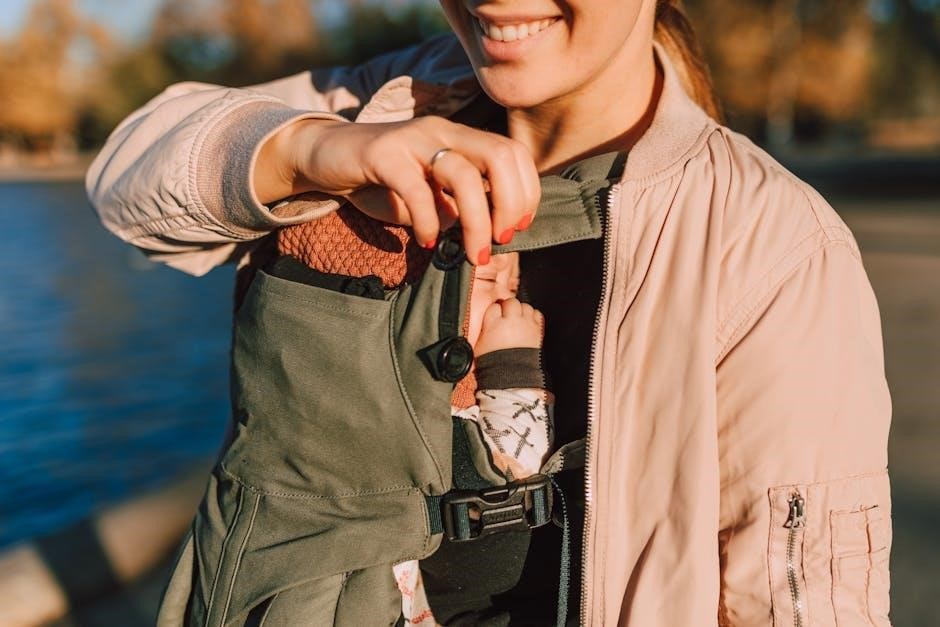
Tula Carrier Instructions: A Comprehensive Guide
Welcome! This guide provides detailed instructions for safe and comfortable babywearing with your Tula carrier. Always read all precautions and familiarize yourself with the carrier’s features before first use.
Tula carriers meet EN 13209-2:2006 safety standards, ensuring a secure experience. Proper usage, as outlined in this manual, is crucial for both parent and child.
Understanding Your Tula Carrier
Your Tula carrier is designed for ergonomic comfort and versatility, supporting both you and your baby. It’s crucial to understand its adaptable nature, evolving with your child’s growth. The Tula Explore, for instance, is an all-in-one carrier, offering multiple positions from newborn through toddlerhood.
Before use, take time to identify each component. Familiarize yourself with the adjustable straps, panel width adjustments, and the secure buckle system. These features allow for a customized fit, ensuring optimal support and comfort. Tula carriers comply with European Safety Norm EN 13209-2:2006, demonstrating a commitment to safety standards.
Understanding the carrier’s adjustability is key. The panel can be adjusted in width to accommodate different stages of infant development, and the straps can be modified for various body types. Proper adjustment is vital for maintaining the correct ergonomic ‘M-position’ for your baby, promoting healthy hip development. Always practice assembling and adjusting the carrier before placing your child inside, ensuring a confident and secure experience. Remember, incorrect usage can void the warranty.
Important: Never modify the carrier from its original design.
Safety Precautions & Warnings
WARNING: Always prioritize safety when using your Tula carrier. NEVER leave your child unattended while in or with the carrier. A significant suffocation hazard exists for infants under four months; ensure their face is always visible and unobstructed by the carrier fabric.
Before each use, meticulously inspect the carrier for any signs of damage – tears, loose stitching, or buckle malfunctions. Do not use a damaged carrier. Practice putting on and adjusting the carrier without your baby to ensure a secure and comfortable fit.
Be mindful of your baby’s developmental stage and weight limits for each carry position. Overextending a position or exceeding weight limits compromises safety. Maintain a firm hold of your baby when maneuvering, especially during initial adjustments.
Crucially, read all instructions thoroughly before use. Misuse or failure to follow instructions can lead to falls or injury. Warranty coverage is voided by any use not in accordance with this manual. Always ensure your baby is securely positioned within the carrier, and their airway remains clear.
Remember: Your baby’s safety is paramount.
Carrier Components & Features
The Tula Explore Baby Carrier, an all-in-one design, boasts several key components for optimal comfort and versatility. These include adjustable padded shoulder straps, a supportive waist belt, and a removable drool bib – essential for keeping your carrier clean.
The panel adjusts in width, accommodating growth from newborn to toddler stages. Buckles are strategically placed for easy adjustments and secure fastening. The integrated newborn mode supports infants without requiring an infant insert. The breathable mesh panel ensures airflow, keeping both parent and baby cool.
Key Features: Ergonomic design promotes healthy hip development for your baby. Multiple carry positions – front, hip, and back – offer flexibility as your child grows. The padded waist belt distributes weight evenly, reducing strain on your back and shoulders. The removable hood provides sun protection and privacy.
Familiarize yourself with each component’s function and adjustment mechanisms. Understanding these features will allow you to customize the carrier for the perfect fit and ensure a comfortable experience for both you and your little one.
Explore the possibilities with your Tula!
Preparing for First Use
Before embarking on your babywearing journey with your Tula carrier, thorough preparation is essential. Begin by carefully inspecting the carrier for any manufacturing defects or damage. Ensure all straps, buckles, and seams are intact and secure.
Practice adjusting the carrier before placing your baby inside. Familiarize yourself with the buckle system and how to widen or narrow the panel. Adjust the shoulder straps and waist belt to achieve a comfortable, customized fit. It’s helpful to practice in front of a mirror to visualize the process;
Read the complete instructions, paying close attention to the recommended carry positions and weight/height limits. Understand the proper way to position your baby within the carrier, ensuring their airway remains open and unobstructed.
Consider practicing with a weighted doll or stuffed animal to build confidence. This allows you to master the steps without the added concern of supporting a real baby. Remember, safety is paramount. A well-prepared caregiver is a confident caregiver!
Practice makes perfect – and safe!
Newborn Mode (0-4 Months) ‒ Specific Instructions
When using your Tula carrier with a newborn (0-4 months), utilizing the designated “Newborn Mode” is crucial for optimal support and safety. This mode provides the necessary adjustments to accommodate a smaller infant’s size and developmental needs;
Ensure the panel is in its narrowest setting, utilizing the adjustable inserts if your carrier includes them. These inserts create a snug, secure pocket for your baby, supporting their legs in a healthy “M-position.” Always confirm your baby’s face is visible and their chin is positioned above the carrier panel edge – never pressed against it to avoid suffocation hazards.
Carefully follow the panel height adjustment instructions to ensure proper back support for your newborn. Regularly check your baby’s positioning throughout use. Infants under four months are particularly vulnerable, so never leave your baby unattended while in the carrier.
Important: Constant monitoring and adherence to these specific instructions are vital for safe newborn babywearing.
Front Carry Positions (Inward & Outward Facing)
The Tula carrier offers versatile front carry positions, including both inward (parent-facing) and outward (world-facing) options, catering to your baby’s developmental stage and preferences. For younger infants, the inward-facing position provides crucial closeness and security, promoting bonding and regulating their emotional state;

To achieve a secure inward carry, ensure your baby’s legs are positioned in a healthy “M-position,” with knees higher than their bottom. The carrier panel should be adjusted to provide adequate back support. As your baby grows and gains head control (typically around 5-6 months), you can transition to the outward-facing position.
When outward-facing, ensure your baby is securely positioned and can easily see their surroundings. Regularly check their posture and adjust the carrier as needed. Remember that prolonged outward-facing can be overstimulating for some babies, so observe their cues and alternate positions accordingly.
Hip Carry Position ‒ Detailed Steps
The hip carry position in your Tula carrier is ideal for older babies who have strong head and neck control and enjoy observing the world around them. This position promotes healthy hip development by supporting the “M-position” – knees higher than the bottom.
Step 1: Begin with the carrier already on your body, straps adjusted. Step 2: Gently position your baby on your hip, ensuring their back is supported by the carrier panel. Step 3: Bring the shoulder strap up and over baby’s back, securing it in the buckle.
Step 4: Adjust the panel width to ensure a snug and comfortable fit around your baby. Step 5: Tighten all straps – waist, shoulder, and sternum – for optimal security. Regularly check your baby’s positioning, ensuring their airway remains clear and they are comfortably supported.
Important: Practice in front of a mirror to confirm correct positioning. Ensure baby’s weight is evenly distributed and you maintain a comfortable posture.
Back Carry Position ‒ A Step-by-Step Guide
The back carry position is suitable for older babies with excellent head and neck control, offering comfort for both parent and child during longer periods of carrying. It allows you to maintain a free range of motion while keeping your little one close.
Step 1: Loosen all straps on your Tula carrier. Step 2: Position the carrier on your back, ensuring the panel is at the correct height. Step 3: Carefully lift your baby and gently lower them into the carrier, supporting their back and head.
Step 4: Bring the shoulder straps forward and buckle them securely. Step 5: Tighten the waist belt first, then the shoulder straps, and finally the sternum strap for a snug and secure fit. Regularly check baby’s positioning, ensuring their face is visible and their airway is clear.
Important: It’s recommended to have assistance when first learning the back carry. Practice in front of a mirror to confirm correct positioning and a comfortable fit for both of you.
Adjusting the Carrier for Optimal Fit
Achieving an optimal fit is paramount for both comfort and safety when using your Tula carrier. A properly adjusted carrier distributes weight evenly, minimizing strain on your back and shoulders, while ensuring your baby is securely positioned.
Begin by loosening all straps before placing your baby in the carrier. Once baby is settled, tighten the waist belt first – this is the primary weight-bearing component. Ensure it sits comfortably and snugly around your hips, not your waist.
Next, adjust the shoulder straps to eliminate any slack, bringing the panel closer to your body. Tighten these straps until they feel secure but not overly constricting. Finally, utilize the sternum strap to prevent the shoulder straps from slipping and to further distribute weight.
Remember: Regularly check the fit as your baby grows. Minor adjustments may be needed to maintain optimal comfort and support. A snug fit allows for the “kiss the head” test – you should be able to easily lean forward and kiss your baby’s head without significant space between you and the carrier.

Weight & Height Limits for Each Position
Understanding the weight and height limits for each carry position is crucial for ensuring your baby’s safety and comfort within the Tula carrier. Exceeding these limits can compromise the carrier’s structural integrity and potentially harm your child.

Newborn Mode (0-4 months): Requires the use of the infant insert (sold separately) and is suitable for babies weighing between 7-11 lbs (3.2-5 kg).
Front Carry (Inward & Outward): Suitable for babies weighing between 11-20 lbs (5-9 kg) in the inward-facing position. Outward-facing is appropriate for babies 13-20 lbs (6-9 kg) and who have sufficient head and neck control.
Hip Carry: Recommended for babies weighing between 13-40 lbs (6-18 kg) and with a minimum height of 16 inches.
Back Carry: Designed for babies 18 months and older, or when they have excellent head and neck control, weighing between 20-45 lbs (9-20 kg) and a minimum height of 24 inches.

Always prioritize your baby’s developmental stage and physical capabilities when selecting a carry position.
Cleaning & Maintenance of Your Tula Carrier
Proper cleaning and maintenance are essential to prolong the life of your Tula carrier and ensure a hygienic environment for your baby. Regular care will keep your carrier functioning optimally and looking its best.
Spot Cleaning: For minor spills or stains, gently spot clean the carrier with a mild detergent and damp cloth. Avoid harsh chemicals or bleach, as these can damage the fabric;
Machine Washing: Most Tula carriers are machine washable on a gentle cycle with cold water. Place the carrier in a mesh laundry bag to protect it during washing. Always use a mild, baby-safe detergent.
Drying: Air drying is highly recommended to prevent shrinkage and maintain the carrier’s shape. If using a dryer, select a low heat setting and remove promptly.
Hardware Care: Regularly inspect buckles, straps, and seams for any signs of wear and tear. Clean buckles with a damp cloth. Do not submerge the hardware in water.
Storage: Store your Tula carrier in a cool, dry place away from direct sunlight.
Troubleshooting Common Issues
Encountering difficulties with your Tula carrier? Here’s a guide to resolving some common issues. Always prioritize safety and discontinue use if you’re unsure about any adjustment.
Difficulty with Buckles: If buckles are hard to fasten or unfasten, ensure they are free of debris. A gentle cleaning with a damp cloth can help. Avoid forcing them.
Strap Adjustments: If straps feel loose, double-check that they are properly threaded and tightened. Ensure even weight distribution for optimal comfort.
Carrier Feels Uncomfortable: Adjust the panel width and height to fit your baby’s size and stage. Experiment with different carry positions to find the most comfortable option.
Baby Seems Uncomfortable: Ensure baby’s legs are in a healthy “M” position, with knees higher than their bottom. Check for proper airflow and avoid overheating.
Panel Won’t Adjust: Verify you are using the correct adjustment method for your carrier model. Refer to the detailed instructions for specific guidance.
If issues persist, consult the Tula website or contact customer support for further assistance.
Understanding the EN 13209-2:2006 Safety Standard
Tula Ergonomic Baby Carriers are designed with safety as a top priority, and proudly comply with the European Safety Norm for Soft Carriers, EN 13209-2:2006. This standard sets rigorous testing criteria to ensure baby carriers meet specific safety requirements.
What does this mean for you? It signifies that your Tula carrier has undergone thorough evaluation for structural integrity, material quality, and design safety features. Testing includes assessments of buckles, straps, fabrics, and overall carrier construction.
Key areas covered by the standard include ensuring the carrier can withstand specific loads, that there are no small parts that could pose a choking hazard, and that the carrier’s design supports a safe and ergonomic position for your baby.
Compliance with EN 13209-2:2006 provides assurance that your Tula carrier has been independently verified to meet a recognized safety benchmark. However, always follow the instructions carefully to ensure proper use and maintain safety.
Proper usage, as detailed in this manual, is essential to maximize the safety benefits of your Tula carrier.
Warranty Information & Product Registration
Tula stands behind the quality of its products; We offer a limited warranty against manufacturing defects in materials and workmanship. This warranty covers the original purchaser for a period of one year from the date of purchase.

Warranty coverage does not extend to normal wear and tear, misuse, alterations, or damage resulting from accidents. Specifically, the warranty does not cover any Tula carrier product that is not used in accordance with the instructions outlined in this manual.
To initiate a warranty claim, please contact our customer support team with proof of purchase and a detailed description of the defect. We may request photos or require the product to be returned for inspection.
Product Registration is highly recommended! Registering your Tula carrier allows us to keep you informed about important product updates, safety recalls, and exclusive offers. It also streamlines the warranty claim process if needed.
Register your product easily through our website at [insert website address here]. By registering, you demonstrate your commitment to safe babywearing and help us continue to improve our products.
Resources & Further Learning (Tula Website & Support)
Tula is dedicated to supporting your babywearing journey! Our website, [insert website address here], is a comprehensive resource for all things Tula. You’ll find detailed instructions, frequently asked questions, and helpful videos demonstrating various carrying positions.

Explore our online instruction library for visual guides on how to properly use your Tula carrier, from newborn mode to back carries. We also offer articles on babywearing safety, ergonomic positioning, and choosing the right carrier for your needs.
Need personalized assistance? Our dedicated customer support team is here to help! You can reach us via email at [insert email address here] or through the contact form on our website. We strive to respond to all inquiries promptly and thoroughly.
Join the Tula Community! Connect with other babywearers on our social media channels ([insert social media links here]) to share tips, ask questions, and find inspiration; Learn how to use Tula baby carriers and discover the easy way to babywear!
We are committed to providing you with the resources and support you need to enjoy safe and comfortable babywearing with your Tula carrier.